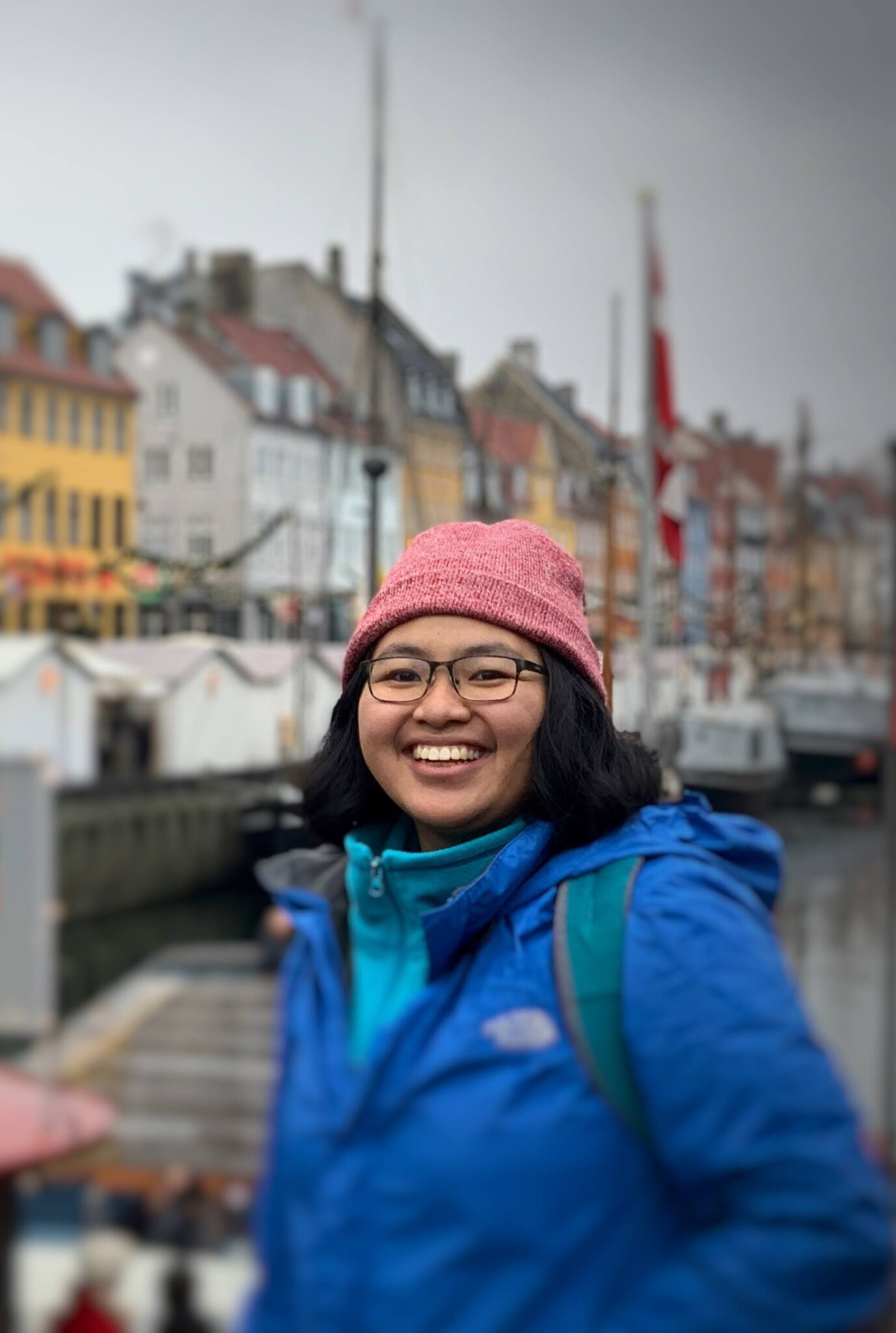
Iris Bea Ramiro
Bea grew up in the island province of Bohol in the Philippines. She has been surrounded by nature all her life which led to her interest in natural products, initially from plants and now from venomous marine gastropods.
She discovered a hormone-like peptide from slow-hunting cone snails, which has biomedical applications. She loves sharing her insights into the fascinating world of cone snails through science education and outreach projects. Having recently finished her PhD, she is continuing her research at Helena Safavi's lab at the University of Copenhagen in Denmark.
When she is out of the lab, Bea is a photography enthusiast who enjoys traveling and exploring the outdoors.
Let's start by talking a bit about your childhood and where you grew up.
I grew up in Bohol, which is an island province in the Philippines. I have a younger brother, and, like any typical Filipino family, we grew up living very close to our aunts and uncles. So even if it was just the two of us siblings, my brother and I always played with our cousins — it was a very communal upbringing.
Bohol is known for its natural beauty — the Chocolate Hills, the tarsiers, the white sand beaches. Growing up there, I was always surrounded by nature, and I think that really influenced my interest in biology and natural products.
What drew you to cone snails?
I studied chemistry at the University of the Philippines Diliman, where natural products — especially herbal medicine — are a big research focus. My undergraduate thesis tested whether the sacred garlic pear tree, used in traditional Filipino medicine, actually had the anti-inflammatory properties people claimed. That interest in natural products stuck with me, but I always thought of them as things extracted from plants — until I attended a talk by Dr. Baldomero Olivera, a renowned cone snail venom researcher. Watching videos of cone snails hunting their prey, I was amazed, and realized how underexplored marine natural products were in the Philippines compared to plants.
I started at the UP Marine Science Institute studying turrid snails — venomous "little cousins" of cone snails — before switching to a lesser-studied deep-water species, Conus rolani, for my Master's, where I isolated a bioactive peptide from its venom. That work connected me to Dr. Olivera's network and eventually to my PhD supervisor, Dr. Helena Safavi, at the University of Copenhagen, whose research aligned with the peptide I'd found. My doctoral work focused on a hormone-like venom peptide similar to somatostatin, a hormone found in vertebrates — identifying what it targets in the body and exploring its potential applications for pain and inflammation. That research was published in Science Advances in 2022, and I'm still expanding on it at the Safavi Lab, now looking for similar peptides in fish-hunting cone snails like the potentially deadly Conus geographus.
Your outreach work
I love sharing the strange, fascinating world of cone snails with people outside the lab, including through outreach projects with children — showing them cone snail harpoons and talking through how the venom works, even if that means learning to explain biomedical concepts in Danish. Being a Filipina scientist in Europe has shaped how I see representation in the field, too: when my university asked me to find a female examiner for my PhD committee, we struggled to find anyone suitable, which sparked real conversations in my lab about representation and diversity. Funding opportunities can also be harder to come by for researchers who aren't from the EU. Looking ahead, I want to keep researching cone snail venoms while continuing the science communication and outreach work that first got me hooked on sharing science with the public.